2026 Top Insights on 48v Forklift Battery for Global Buyers?
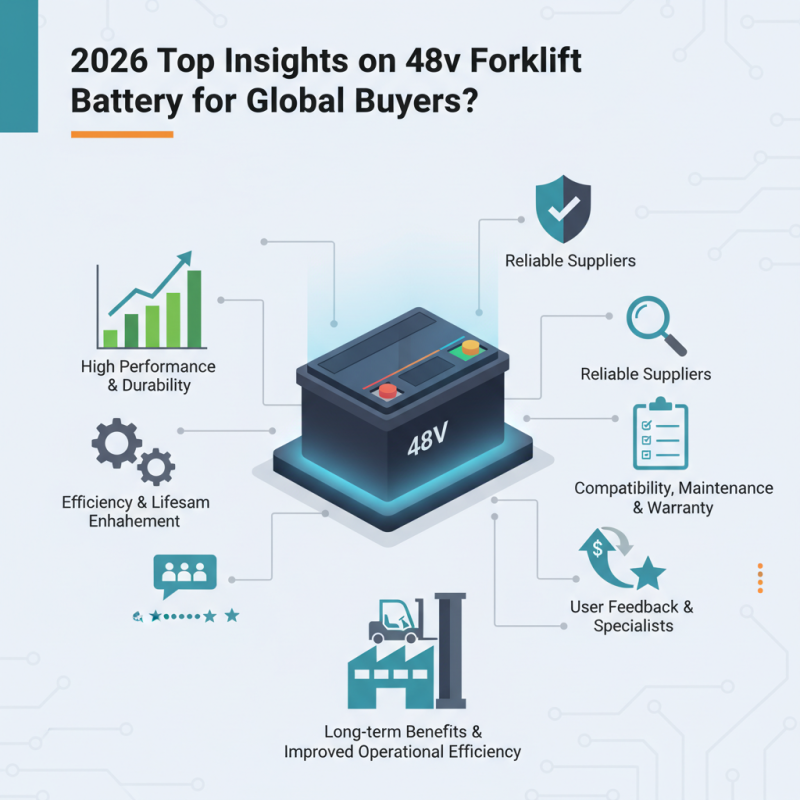
The demand for efficient and reliable power sources in material handling has led to a surge in interest around the 48v Forklift Battery. This battery type is becoming increasingly popular due to its high performance and durability. For global buyers, understanding the key insights about these batteries can significantly influence their purchasing decisions.
Manufacturers are innovating daily, enhancing the efficiency and lifespan of the 48v Forklift Battery. Battery technology is evolving, but not all products meet the necessary standards. Buyers must evaluate the reliability of suppliers carefully. In an industry where downtime can be costly, making informed choices is critical.
With a multitude of options, it can be overwhelming to select the right battery. Prospective buyers should consider factors like compatibility, maintenance requirements, and warranty. Additionally, practical feedback from existing users can provide valuable insights. Engaging with specialists or trusted sources can guide decision-making. Investing in the right 48v Forklift Battery could lead to long-term benefits and improved operational efficiency.
2026 Trends in 48V Forklift Battery Technology
The evolution of 48V forklift battery technology is crucial for operational efficiency. This voltage range minimizes the complexity of battery management systems while providing substantial power and longevity. Recent trends show the shift towards lithium-ion technology over traditional lead-acid batteries. Lithium-ion solutions offer faster charging and reduced maintenance, making them a preferred choice.
As we look ahead, sustainability remains a significant concern. Companies are investing in batteries that use eco-friendly materials. This shift is essential for meeting global environmental standards. However, the transition to these advanced batteries is not seamless. Higher initial costs can deter potential buyers, despite long-term savings.
Innovation continues to drive the industry forward. Wireless charging systems are emerging, enabling seamless operation in busy warehouses. While this technology promises convenience, its reliability and infrastructure requirements need further scrutiny. Understanding these trends allows global buyers to make informed decisions in a rapidly evolving market.
Advantages of 48V Forklift Batteries for Industrial Applications
When it comes to industrial applications, 48V forklift batteries offer remarkable advantages that enhance operations. These batteries provide a good balance between power and efficiency, contributing to longer run times. They are lighter than other voltage options, allowing for better maneuverability in tight spaces. The energy density of 48V systems supports faster and more responsive operations, which is crucial for busy warehouse environments.
Tips for selecting the right battery: Keep an eye on the expected lifespan. A well-maintained battery can last several years. Furthermore, consider the charging time. A shorter charging cycle can help keep operations running smoothly. Look for batteries that offer quick-release connections, enabling easier maintenance and replacement.
Industrial applications also benefit from low maintenance needs. 48V batteries require less frequent checks compared to traditional options. Their robust construction stands up to various environmental conditions. This can lead to fewer disruptions in service, although it’s essential to monitor performance. Regular assessments can prevent unexpected issues, ensuring reliability. Remember, even the best systems need occasional review to optimize efficiency.
2026 Top Insights on 48v Forklift Battery for Global Buyers
| Dimension |
Specification |
Benefits |
Application |
| Voltage |
48V |
Higher energy efficiency |
Warehousing |
| Capacity |
400Ah |
Longer operational time |
Manufacturing |
| Weight |
500 kg |
Improved stability |
Distribution Centers |
| Cycle Life |
2000 cycles |
Cost efficiency over time |
Logistics |
| Charging Time |
4-6 hours |
Reduced downtime |
Retail |
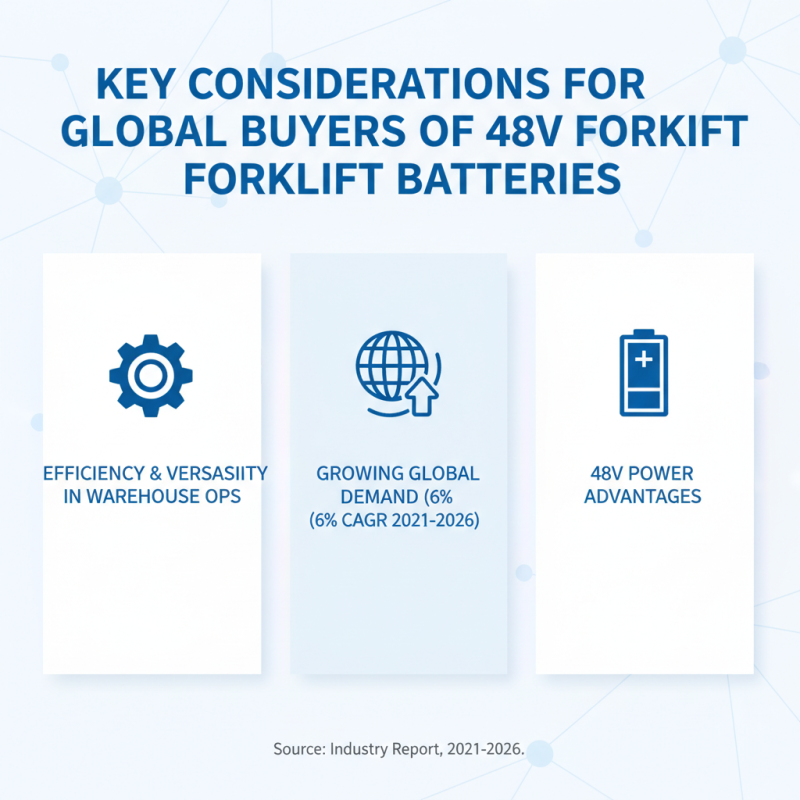
Key Considerations for Global Buyers of 48V Forklift Batteries
When considering the purchase of 48V forklift batteries, global buyers should focus on several key factors. The demand for 48V batteries is growing due to their efficiency and versatility in warehouse operations. According to a recent industry report, the global market for forklift batteries is expected to grow at a CAGR of 6% from 2021 to 2026.
One critical aspect to think about is battery life and performance. High-quality 48V batteries can offer up to 1,500 cycles, depending on usage. Buyers should also evaluate charging time and efficiency. Fast-charging batteries require less downtime, contributing to overall productivity. Yet, it's important to consider the trade-off between speed and battery lifespan.
Tips: Always ask for detailed specifications. Look closely at warranty options. Ensure that the manufacturer provides reliable support services.
Another consideration is the environmental impact. As sustainability becomes a priority, many companies now prefer eco-friendly battery technology. Lithium-ion batteries stand out, as they recharge quickly and have fewer toxic components. Yet, buyers need to weigh their initial costs against long-term savings.
Tips: Research lifecycle impacts of different battery types. Understand recycling options and policies. Engage with suppliers who prioritize eco-friendly practices.
Environmental Impact and Sustainability of 48V Battery Solutions
The environmental impact of 48V forklift battery solutions is significant. As businesses strive for sustainability, battery technology plays a crucial role. A shift to 48V systems can reduce carbon footprints by improving energy efficiency. These batteries are often made with recyclable materials. Their design allows for easy disassembly and reuse. Efficient manufacturing processes further lower emissions.
However, challenges remain. Not all battery components are equally sustainable. Some materials can be harmful to the environment. The production of lithium-ion batteries often involves mining practices that damage ecosystems. Furthermore, recycling processes for these batteries are not yet perfect. There’s a need for more research to enhance recycling methods.
Sustainability goes beyond battery production. Proper usage and maintenance can extend battery life. This reduces waste and conserves resources. Staff training on energy-efficient practices is essential too. Open discussions about sustainability can lead to innovative solutions. Businesses must take a proactive approach, focusing on the long-term environmental impacts of their energy choices.
Future Developments in 48V Forklift Battery Markets and Innovations
The 48V forklift battery market is evolving rapidly. Innovations are shaping how businesses approach warehousing and logistics. Advanced technologies in battery chemistry lead to improved energy density and lifespan. Lithium-ion technologies, for example, gain traction due to their efficiency and reduced maintenance needs.
However, the transition isn’t without challenges. Companies face hurdles in recycling and environmental impact. The demand for sustainable practices is mounting. Many buyers prioritize batteries that align with eco-friendly initiatives. This reflects a shift in market expectations. Buyers seek products that are not only effective but also responsible in their production and disposal.
Future developments in the 48V forklift battery sector are promising yet complex. Automation in charging systems and energy management enhances overall efficiency. Yet, the necessity for user education cannot be overlooked. Users often struggle with understanding battery maintenance techniques. Training programs must evolve alongside technology to support optimal usage. Balancing innovation with user competence remains vital for successful implementation.