



Factory Tour
Top 5 Benefits of Using a 48V 300Ah Forklift Battery in 2025
As the material handling landscape evolves in 2025, the demand for efficient and sustainable energy solutions in warehouse operations is at an all-time high. Among the various innovations in industrial battery technology, the 48V 300Ah Forklift Battery stands out as a formidable choice for businesses looking to enhance their operational efficiency. Reports indicate that the use of advanced battery systems can lead to a 25% reduction in energy costs, supporting increased productivity and sustainability in warehouse environments.
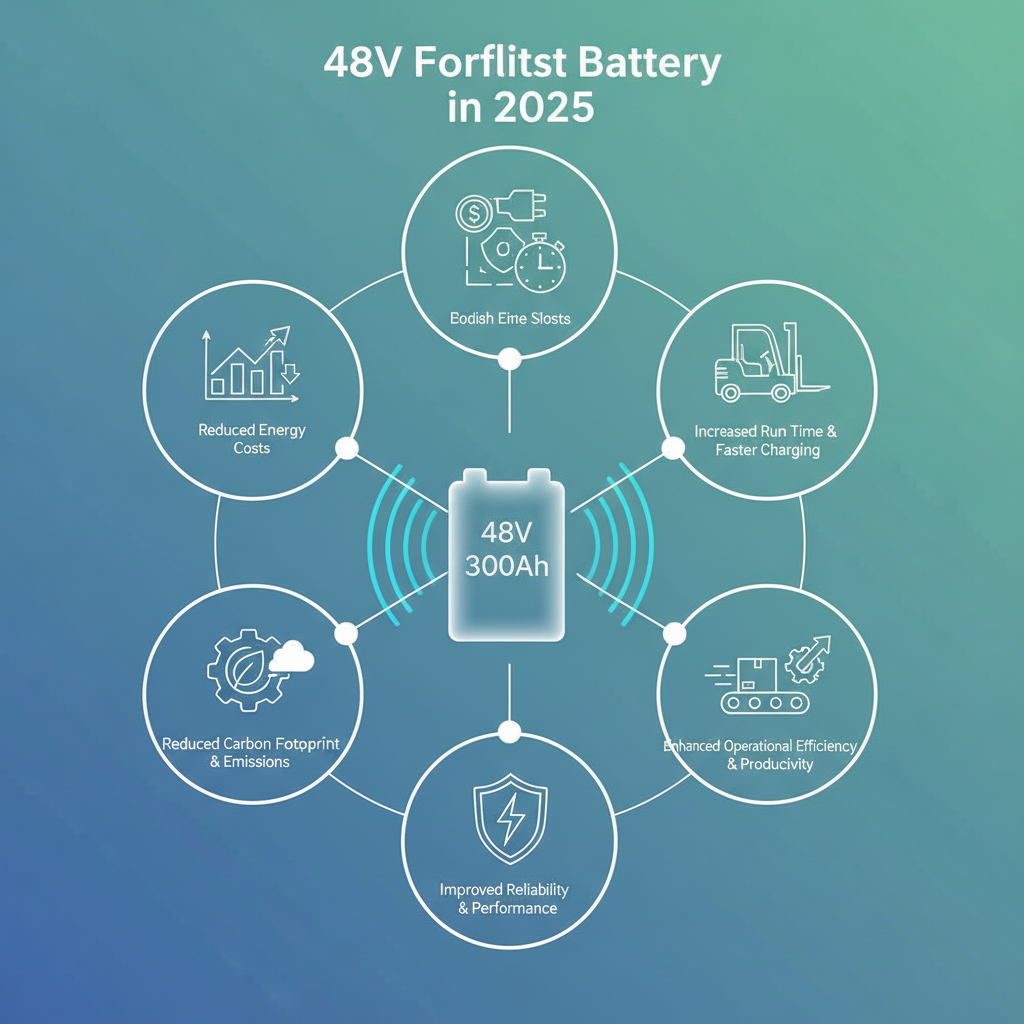
In recent years, the logistics and manufacturing sectors have seen a rising preference for electric forklifts, with an estimated 40% of operations transitioning from traditional fuel-based solutions to electric-powered ones by 2025. This shift is driven by the growing emphasis on reducing carbon footprints and optimizing energy consumption. The 48V 300Ah Forklift Battery not only offers significant performance benefits—such as increased run time and faster charging—but it also aligns with the industry's move towards greener technologies, as electric forklifts can reduce greenhouse gas emissions by up to 60% compared to their gas or diesel counterparts.
The implementation of the 48V 300Ah Forklift Battery promises not only to enhance the capabilities of electric forklifts but also fosters a smarter, more efficient approach to material handling. As the need for reliability and performance in industrial operations continues to grow, this advanced battery technology is poised to transform the landscape of material handling equipment well into the next decade.
Advantages of Higher Voltage in Forklift Batteries
The advantages of using a 48V 300Ah forklift battery are particularly noticeable in the context of higher voltage systems. One of the primary benefits is improved efficiency. A higher voltage system allows for better energy transfer, reducing the overall current required. This results in less heat generation and minimizes energy loss during operation, ultimately enhancing the battery’s lifespan and performance.
Moreover, higher voltage enables increased power output without the need for oversized cables and connections. This means manufacturers can design more compact and lighter forklift systems, which is particularly beneficial in warehouses with tight spaces. As a tip, businesses should consider the specific power requirements of their operations to ensure they choose the right battery system that maximizes both efficiency and performance.
Another key advantage is faster charging times. High-voltage batteries typically recharge more quickly, which translates to less downtime and greater productivity. When selecting a forklift battery, it’s essential to evaluate the charging infrastructure to fully utilize the rapid recharging capabilities that a 48V system provides. Remember to align battery voltage with your forklift model to ensure compatibility and optimal performance.
Top 5 Benefits of Using a 48V 300Ah Forklift Battery in 2025
| Benefit | Description | Impact on Efficiency | Cost Savings |
|---|---|---|---|
| Increased Power | Higher voltage provides more power for demanding applications. | Significantly improves lifting and hauling capabilities. | Reduces operational time, leading to lower labor costs. |
| Longer Runtime | 300Ah capacity allows for extended use without frequent recharging. | Increases operational hours per shift. | Minimizes downtime and battery replacement costs. |
| Faster Charging | Higher voltage systems can charge more quickly. | Reduces time spent in charging stations. | Shortens maintenance and overall operational costs. |
| Better Performance in Cold | Higher voltage batteries perform better in low temperatures. | Maintains efficiency in challenging environments. | Less need for additional heating equipment. |
| Enhanced Safety Features | Modern designs include safety features to prevent overheating. | Decreases risk of accidents related to battery failures. | Lowers insurance and liability costs. |
Related Posts
-
Challenges Faced When Using 48v Forklift Batteries for Global Operations
-
Future Trends in 2025 for the Best 48v Forklift Battery and Innovative Solutions for Sustainability
-
How to Maximize the Lifespan of Your Forklift Battery
-
Maximizing Efficiency: The Ultimate Guide to 48V 300Ah Forklift Batteries for Modern Warehousing
-
Unlocking the Power of Auto Lifepo4 Start Batteries: A Deep Dive into Their Advantages and Features
-
What Makes Power Wall Lifepo4 Battery 10kwh 200ah a Game Changer in Energy Storage


