How to Choose the Best 72v Lifepo4 Golf Cart Battery?
Choosing the best 72v Lifepo4 golf cart battery is essential for optimal performance and longevity. According to recent market reports, the demand for lithium-ion batteries, especially Lifepo4 variants, has surged due to their efficiency and durability. Golf carts equipped with these batteries can offer up to 50% longer usage time compared to traditional lead-acid batteries.
However, not all 72v Lifepo4 golf cart batteries are created equal. Factors such as capacity, charging cycles, and thermal stability play vital roles in battery performance. A reputable study from the Battery University highlights that Lifepo4 batteries typically provide over 2000 charge cycles, outperforming other chemistries like Nickel-Metal Hydride.
As you consider options, reflect on battery certifications and warranties. These can indicate reliability and long-term service. Make informed decisions to ensure you get the best value. With various choices on the market, careful evaluation is necessary for your specific needs.
Factors to Consider When Selecting a 72V LiFePO4 Golf Cart Battery
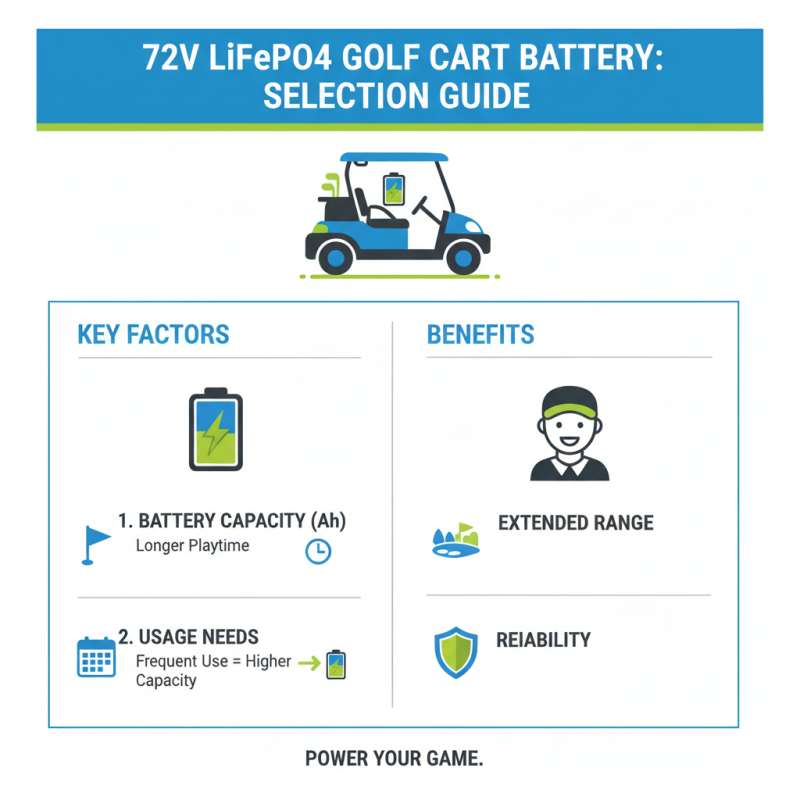
Choosing the right 72V LiFePO4 golf cart battery involves several critical factors. Battery capacity is essential. A higher amp-hour rating means longer usage between charges. This is particularly important for those long days on the golf course. Consider your usage needs. If you play regularly, look for a battery with a higher capacity.
Weight matters too. LiFePO4 batteries are lighter than traditional ones. This can enhance the performance of your golf cart. Yet, some might overlook how weight impacts overall handling and efficiency. Durability is another factor. A sturdy battery will withstand the rigors of frequent use. Check for features like temperature resistance and vibration tolerance. These details can inform your long-term investment.
Cost cannot be ignored. While cheaper options exist, they may lack essential features. Evaluate the warranty as well. A longer warranty often reflects manufacturer confidence in their product. Make sure to read reviews, looking for real user experiences. Some products might have unexpected performance issues. Balancing all these elements requires thorough research. Rushing the decision can lead to dissatisfaction later. Take your time to reflect on your choices.
Understanding the Importance of Cycle Life in Battery Selection
When selecting a 72v LiFePO4 golf cart battery, cycle life is crucial. Cycle life indicates how many charge and discharge cycles a battery can undergo before capacity significantly declines. Studies show that LiFePO4 batteries offer over 2,000 cycles, which is much higher than traditional lead-acid options. This longevity can lower the total cost of ownership over time.
Understanding cycle life helps gauge performance. A longer cycle life translates to fewer replacements, reducing waste and inconvenience. It’s essential to consider your usage patterns. Frequent short trips may not fully utilize battery capacity, affecting its life.
Tip: Monitor your battery health regularly. This ensures efficient performance. Also, consider temperature impacts; LiFePO4 batteries can lose capacity in extreme heat or cold.
Evaluating warranty offers insights into expected performance. Better warranties often reflect higher quality and cycle life. Still, not all warranties are created equal. Review terms carefully to understand coverage.
Comparing the Weight and Size of 72V LiFePO4 Batteries for Golf Carts
When choosing a 72V LiFePO4 battery for your golf cart, weight and size are key factors. These batteries provide efficiency and long-lasting power, but their dimensions can impact cart performance. A lighter battery can enhance speed and maneuverability. However, a compact design must also fit securely within your cart's battery compartment.
Additionally, battery weight affects installation and maintenance. Understanding the balance between power capacity and weight is crucial. Some may choose larger batteries for higher performance. But consider how this impacts your golf cart's handling. It can lead to unexpected difficulties on the course.
The differences in battery design can be striking. Some batteries are more compact, while others prioritize higher density. It's essential to reflect on your specific needs. What matters most: weight, size, or a combination? Knowing your priorities will guide your choice.
Evaluating the Charging Time and Efficiency of 72V LiFePO4 Batteries
When selecting a 72V LiFePO4 battery for golf carts, charging time and efficiency are critical factors. Research indicates that LiFePO4 batteries can recharge significantly faster than traditional lead-acid options. For instance, a study by Battery University shows that a LiFePO4 battery can reach 80% charge in just one hour, while lead-acid batteries take several hours. Efficiency rates for LiFePO4 batteries can reach up to 95%, compared to 75% for lead-acid varieties.
Charging cycles also reveal important data. According to a report by the International Energy Agency, LiFePO4 batteries offer around 2000-5000 charge-discharge cycles, depending on usage. This contrasts with only 500-800 cycles for lead-acid batteries. Such longevity considerably enhances cost-effectiveness over time, as the need for replacements decreases. However, the initial investment in LiFePO4 technology can be higher.
Environmental considerations are also vital. LiFePO4 batteries are more eco-friendly than their lead-acid counterparts. The absence of toxic materials leads to easier recycling processes. Nevertheless, the higher upfront cost may deter some buyers despite the long-term savings. Awareness and education on these benefits need to be improved among golf cart users to ensure informed decision-making.
Assessing Warranty and Safety Ratings for LiFePO4 Battery Options
When choosing a 72v LiFePO4 golf cart battery, it’s crucial to assess warranty and safety ratings. A solid warranty reflects the manufacturer's confidence in their product. Look for a warranty period of at least five years. A longer warranty can indicate better longevity and performance. However, verify what’s covered. Some warranties exclude certain types of damage or wear.
Safety ratings are equally important. Check for certifications from recognized safety organizations. These ratings show how the battery performs in accidents or under stress. LiFePO4 batteries generally offer better thermal stability than other lithium batteries. Still, it’s wise to choose options with heat management features. Ensure the battery has undergone rigorous testing. Earning safety certifications will boost your trust in its reliability.
Consider potential shortcomings too. Some batteries may have excellent safety ratings but limited capacities. Research user experiences for honest feedback. While ratings can guide your choice, individual performance may vary. Pay attention to real-life usage to understand better how the battery may perform for you. This approach helps in making a more informed decision.