Why Choose Lithium Batteries for Automobile Starters?
In recent years, the automotive industry has seen a significant shift towards lithium batteries for automobile starters. John Smith, an industry expert, once stated, "Lithium batteries offer unmatched reliability and performance for modern vehicles." This statement captures the essence of why many manufacturers are choosing these advanced power solutions.
Automobile Start Lithium Battery technology has revolutionized how vehicles are powered. These batteries are lighter and more efficient compared to traditional lead-acid options. They provide faster startups, even in extreme weather conditions. However, the transition has not been flawless. Some challenges, such as cost and compatibility with existing systems, need addressing.
The benefits of adopting an Automobile Start Lithium Battery system are clear, yet not without concerns. The safety aspect remains a hot topic. Furthermore, consumers often remain skeptical. Education on lithium technology is crucial. Companies must engage in transparent dialogues about sustainability and longevity to change perceptions.

Advantages of Lithium Batteries Over Traditional Lead-Acid Batteries
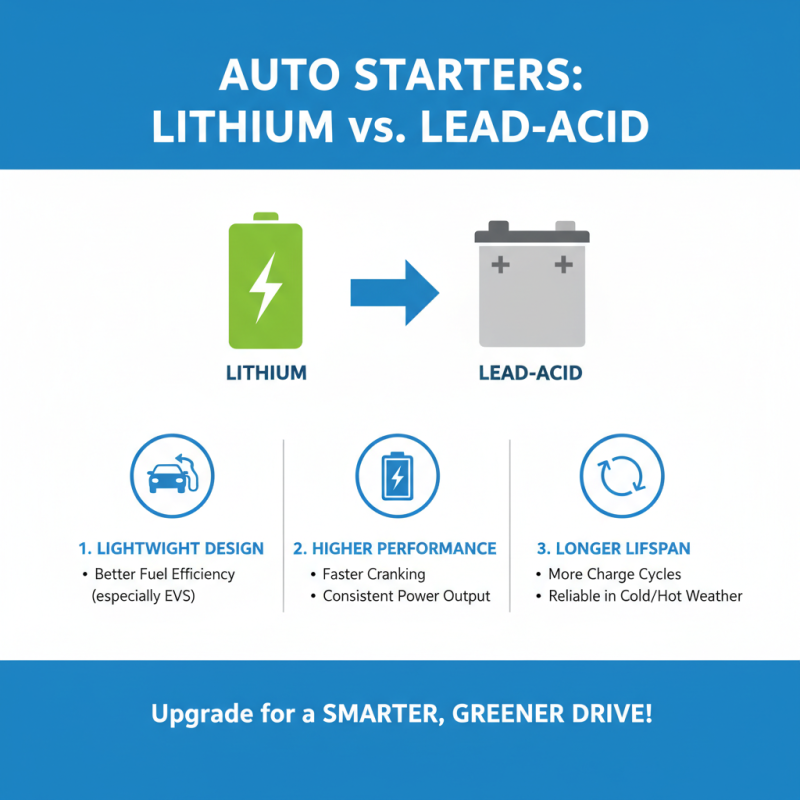
Lithium batteries have gained popularity for automobile starters over traditional lead-acid batteries. They offer several advantages that make them an appealing choice. One major benefit is their lightweight design. Lithium batteries are significantly lighter, which helps improve fuel efficiency in vehicles. This weight reduction is particularly noticeable in electric cars.
Another important factor is the lifespan. Lithium batteries typically last much longer than lead-acid versions. They can endure more charge cycles without losing performance. This means fewer replacements and less environmental waste. Plus, lithium batteries can operate in extreme temperatures, enhancing their reliability in various conditions.
Tip: Always check your vehicle's compatibility with lithium batteries. Not all starter systems are designed for them.
One drawback of lithium batteries is their initial cost. They tend to be pricier than traditional options. However, the long-term savings on maintenance and replacements can offset this expense. It's essential to weigh these factors carefully.
Tip: Consider the total cost of ownership before making a switch. Save money down the road by investing wisely.
Performance Metrics: Start Power and Cranking Amps of Lithium Batteries
Lithium batteries are becoming increasingly popular for automobile starters. Their impressive performance metrics set them apart from traditional battery options. Start power is a crucial measure, indicating the battery's ability to initiate engine function. A higher start power means a smoother ignition, even in colder temperatures.
Cranking amps are equally important. They represent the current a battery can deliver for a brief period while cranking the engine. Lithium batteries excel here. They can provide a high output of cranking amps without the significant weight of lead-acid batteries. This weight advantage is vital, as it enhances overall vehicle performance and efficiency.
However, not every lithium battery performs flawlessly. Some may not hold a charge as well in extreme conditions. Battery management systems are essential to ensure longevity. Users should remain vigilant about maintenance needs. While lithium batteries show promise, potential buyers must weigh their options. Reliability should never be compromised.
Weight Savings: How Lithium Batteries Enhance Vehicle Efficiency
Lithium batteries are gaining popularity for automobile starters. One of their key advantages is weight savings. A lighter battery significantly reduces a vehicle's overall weight. This helps improve fuel efficiency. Lighter cars require less energy to move. Consequently, they can achieve better mileage.
Moreover, lithium batteries have a higher energy density than traditional lead-acid batteries. This means they store more energy in a smaller package. Reducing weight does not compromise power. In fact, it enhances performance. Drivers notice quicker acceleration and improved handling.
However, there are challenges. Lithium batteries can be more expensive upfront. Their long-term benefits may take time to justify the investment. Additionally, proper disposal is crucial. Environmental concerns around lithium extraction and recycling persist. As technology develops, these issues deserve attention. Exploring the benefits and drawbacks may lead to more efficient solutions in the future.
Why Choose Lithium Batteries for Automobile Starters? - Weight Savings: How Lithium Batteries Enhance Vehicle Efficiency
| Vehicle Type |
Traditional Battery Weight (lbs) |
Lithium Battery Weight (lbs) |
Weight Savings (lbs) |
Efficiency Improvement (%) |
| Sedan |
40 |
15 |
25 |
10 |
| SUV |
60 |
25 |
35 |
12 |
| Truck |
80 |
30 |
50 |
15 |
| Motorcycle |
15 |
5 |
10 |
8 |
Longevity and Cycle Life: Comparing Lifespan of Lithium vs. Lead-Acid
Lithium batteries show impressive longevity and cycle life compared to traditional lead-acid batteries. Studies indicate that lithium batteries can last upwards of 3,000 cycles. In contrast, lead-acid batteries typically manage around 500 to 1,000 cycles. This means lithium batteries can potentially outlast lead-acid batteries by several years.
The efficiency and performance of lithium batteries also contribute to their appeal. They maintain a higher charge capacity even in extreme conditions. This can be critical for automobile starters, especially in cold weather. Reports indicate lithium batteries maintain 90% of their capacity at temperatures as low as -20°C.
Cost remains a factor. While lithium batteries are more expensive upfront, their lifespan may offer long-term savings. Users might grapple with the initial investment, weighing it against the potential longevity. Not all drivers will notice the difference immediately. However, for those who prioritize durability and efficiency, lithium batteries present a compelling option in the automotive sector.
Comparison of Lifespan: Lithium vs. Lead-Acid Batteries for Automobile Starters
Environmental Impact: The Sustainability of Lithium Battery Production
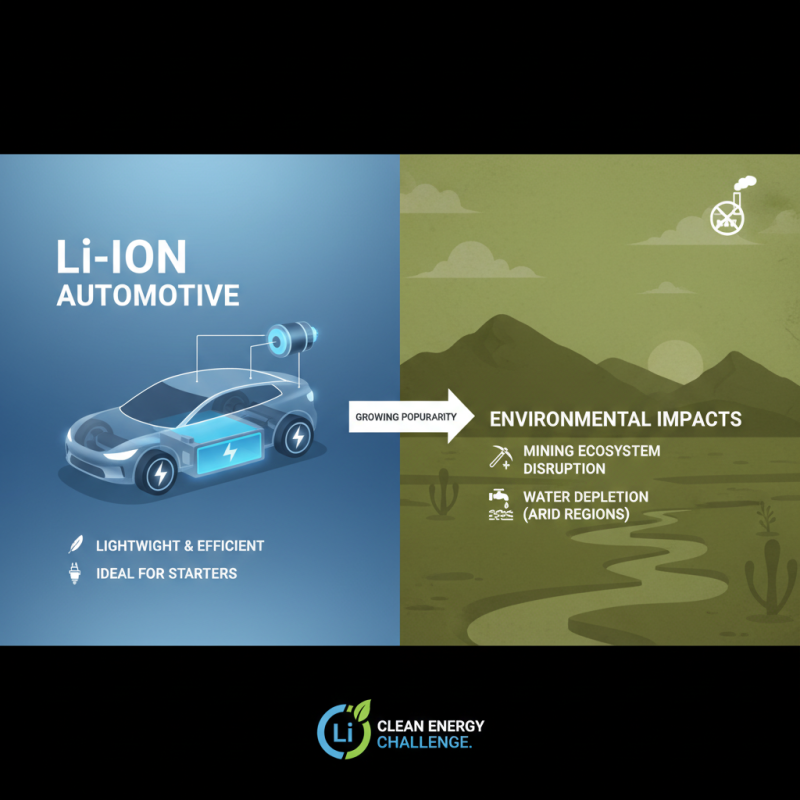
Lithium batteries are gaining popularity in the automotive world. Their weight and efficiency make them ideal for starters. However, the production of these batteries raises significant environmental concerns. The extraction of lithium involves mining that can disrupt ecosystems. Water usage is another critical factor. In arid regions, this can deplete local water sources.
Moreover, battery manufacturing emits carbon emissions. While lithium batteries are recyclable, the recycling systems are not foolproof. Many batteries still end up in landfills. This poses a threat to soil and groundwater. We need to consider these challenges as we embrace new technologies.
Sustainability is a complex issue. Innovations in battery technology may improve energy efficiency. Researchers are exploring new materials that could lessen the environmental impact. However, the path to greener lithium battery production remains fraught with challenges. It’s essential to reflect on these aspects as we move forward in automotive technology.