How to Choose a Lifepo4 Energy Storage Battery for Your Needs?
Choosing the right Lifepo4 Energy Storage Battery can be challenging. With various types and specifications, it helps to understand your needs. This battery type is popular for its longevity and safety features. However, not every Lifepo4 battery will suit your situation.
Consider the storage capacity. How much energy do you need? Your requirements should align with what the battery offers. A small unit may not suffice for large devices. On the other hand, an oversized battery could lead to wasted resources.
Budget is another vital aspect. Lifepo4 Energy Storage Batteries vary in price. Higher costs often reflect better quality and efficiency. Yet, be cautious; a high price does not always mean the best choice. Narrowing down options may require some trial and error. Suggestions from those with experience can be valuable. Thinking critically about your needs will guide you to the right decision.
Understanding Lifepo4 Battery Technology and Benefits
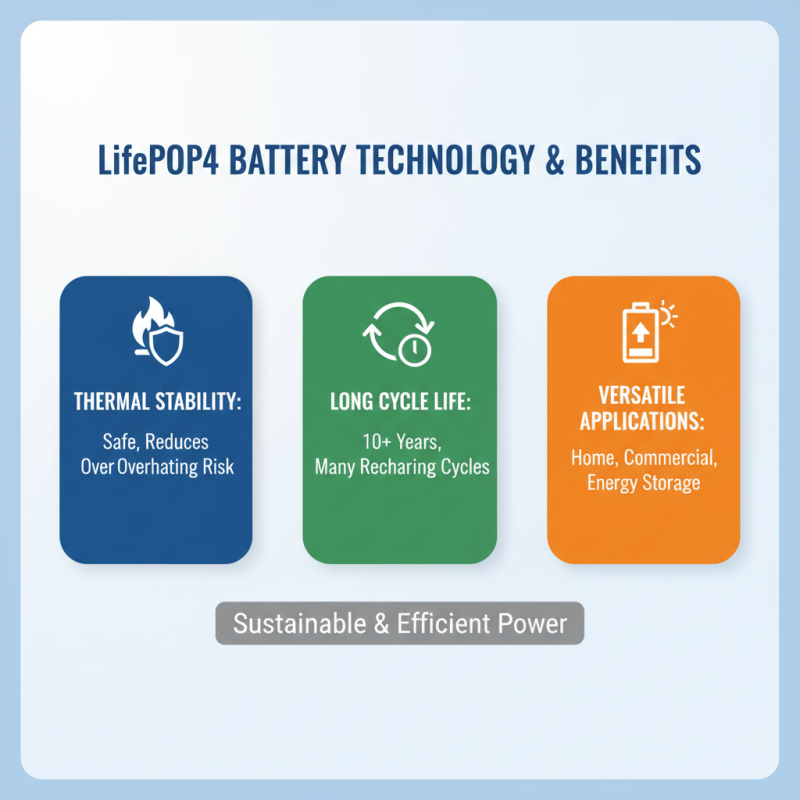
Lithium iron phosphate (LiFePO4) batteries are increasingly popular for energy storage, and for good reasons. They offer a range of advantages that make them suitable for various applications. These batteries are known for their thermal stability, which reduces the risk of overheating. This property is crucial for safety, especially in residential or commercial settings. Their long cycle life means they can endure many charging cycles, typically lasting over a decade with proper care.
Understanding the benefits of LiFePO4 technology is vital. These batteries have a higher discharge rate, making them perfect for high power applications. They are also environmentally friendly, with a non-toxic chemistry compared to other lithium batteries. Additionally, they exhibit a flat discharge curve, providing consistent power until the battery is nearly depleted. However, they are heavier than other lithium-ion batteries, which might be a drawback for mobile applications. Reflecting on these aspects is essential when choosing a battery for your needs.
Furthermore, the initial cost can be a hurdle for some people. While they may be pricier than alternatives, the long-term savings from durability and efficiency often justify that expense. Consider your specific energy needs and usage patterns before making a decision. Evaluating all these factors thoroughly ensures the right fit for your energy storage requirements.
Assessing Your Energy Storage Needs and Applications
When choosing a Lifepo4 battery, assessing your energy storage needs is crucial. Consider how much energy you use daily. Do you need power for home appliances, electric vehicles, or outdoor activities? Each application has different requirements. For example, a home battery might need to support multiple devices at once, while a portable battery may suffice for smaller tasks.
Think about the duration of energy storage as well. Some applications require short-term bursts of power. Others may need consistent, long-term storage. It’s essential to balance your energy use with battery capacity. Consider your budget and the space available for installation too. A larger, heavier battery might not fit into small areas, while smaller units may lack the power you need for significant consumption.
Finally, reflect on future needs. Will your energy requirements grow? Your choice should accommodate both current and future demands. Mistakes can happen if you base decisions only on immediate needs. Evaluating your situation with an open mind can lead to better choices. There’s no one-size-fits-all solution, so take time to understand your specific energy storage landscape.
Factors to Consider When Selecting a Lifepo4 Battery
When selecting a LiFePO4 battery, several factors should influence your decision. Battery capacity is crucial. It determines how much energy you can store. For instance, a common capacity range is between 100Ah to 300Ah. Assess your energy needs based on your application. If you have significant energy demands, you may require multiple batteries. A report from the International Energy Agency indicated that energy storage demands could increase by 40% in the next five years.
Another vital factor is the cycle life of the battery. LiFePO4 batteries generally boast a cycle life of around 2000 to 5000 cycles. This longevity can save money over time. However, remember that cycle life may decrease with deep discharges. Aim to discharge only 80% to maintain efficiency. Choose a battery with a temperature range suitable for your environment. Temperatures outside the recommended range can lead to reduced performance.
**Tip:** Always check the discharge rate. A battery with a higher discharge rate is essential for devices requiring bursts of energy.
Consider the warranty offered. Some manufacturers provide up to 10 years, while others may only offer 2-3 years. Warranty duration often reflects the manufacturer's confidence in their product. While it can be tempting to choose a lower-priced battery, weigh the long-term implications carefully. You might save initially, but higher quality often proves to be a wiser investment.
How to Choose a Lifepo4 Energy Storage Battery for Your Needs?
| Criteria |
Description |
Example Values |
| Capacity (Ah) |
The total charge the battery can store, indicated in amp-hours. |
50Ah, 100Ah, 200Ah |
| Voltage (V) |
The nominal voltage of the battery, typically 12V, 24V or 48V. |
12V, 24V, 48V |
| Cycle Life |
The number of complete charge and discharge cycles the battery can undergo. |
2000 to 5000 cycles |
| Discharge Rate |
The maximum rate at which the battery can safely be discharged. |
0.5C, 1C, 2C |
| Temperature Range |
The operational temperature range for the battery. |
-20°C to 60°C |
| Weight (kg) |
The weight of the battery, affecting transport and installation. |
10kg, 25kg, 50kg |
| Safety Features |
Protections against overcharge, over-discharge, and short circuit. |
Cell management system, fuses |
Evaluating Battery Capacity, Lifespan, and Efficiency
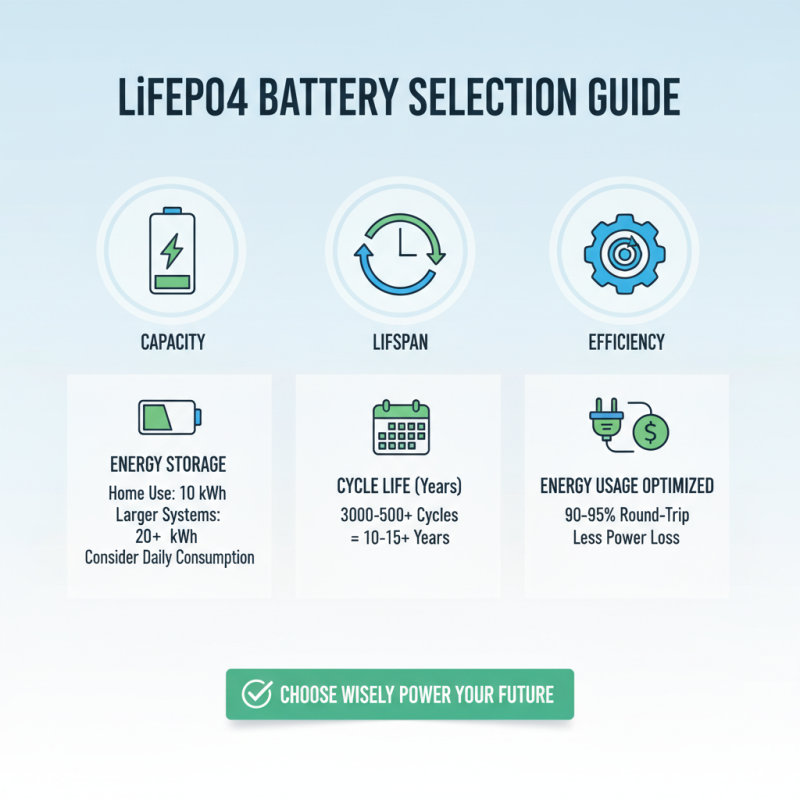
When choosing a LiFePO4 energy storage battery, evaluating capacity, lifespan, and efficiency is crucial. The capacity refers to how much energy the battery can store. For home use, a battery with 10 kWh might be sufficient, while larger systems may need up to 20 kWh. Think about your daily energy consumption. This will guide you in selecting the right size.
Lifespan is another key factor. LiFePO4 batteries have a longer lifespan compared to other lithium batteries. They can last up to 10 years or more with proper care. However, deep cycling can shorten their life. Here’s a tip: avoid charging them to full capacity every time. It can help maintain longevity.
Efficiency is about how well the battery converts stored energy into usable power. Look for batteries with high discharge efficiency rates. A battery with 90% efficiency means only 10% of energy is lost. This makes a difference in your overall energy costs. Remember, not all batteries are created equal. Consider factors like temperature and usage patterns. These can affect performance.
Comparing Costs and Warranty Options for Lifepo4 Batteries
When considering Lifepo4 energy storage batteries, cost is a key factor. Prices can vary significantly based on capacity and manufacturer. A smaller capacity battery may cost less upfront, but better long-term performance could come from a higher capacity option. Look closely at what fits your budget and energy needs.
Warranty options also play a crucial role. Many batteries come with warranties ranging from three to ten years. A longer warranty often indicates higher confidence in the product. However, it's essential to read the fine print. Some warranties cover only specific issues. Remember, a battery’s lifespan could be impacted by usage, charging habits, and environmental factors.
Don’t overlook installation and maintenance costs either. These can add significantly to your total expense. It may seem inexpensive at first, yet hidden costs could arise. Reflect on how often you need to maintain the system. Understanding all potential costs will lead to more informed decisions when choosing the right Lifepo4 battery.