How to Choose the Right Forklift Battery for Your Needs?
Choosing the right forklift battery is crucial for efficient material handling. According to John Miller, a well-respected expert in the forklift battery industry, "Selecting the right battery can significantly impact productivity and safety." This highlights the importance of making an informed decision.
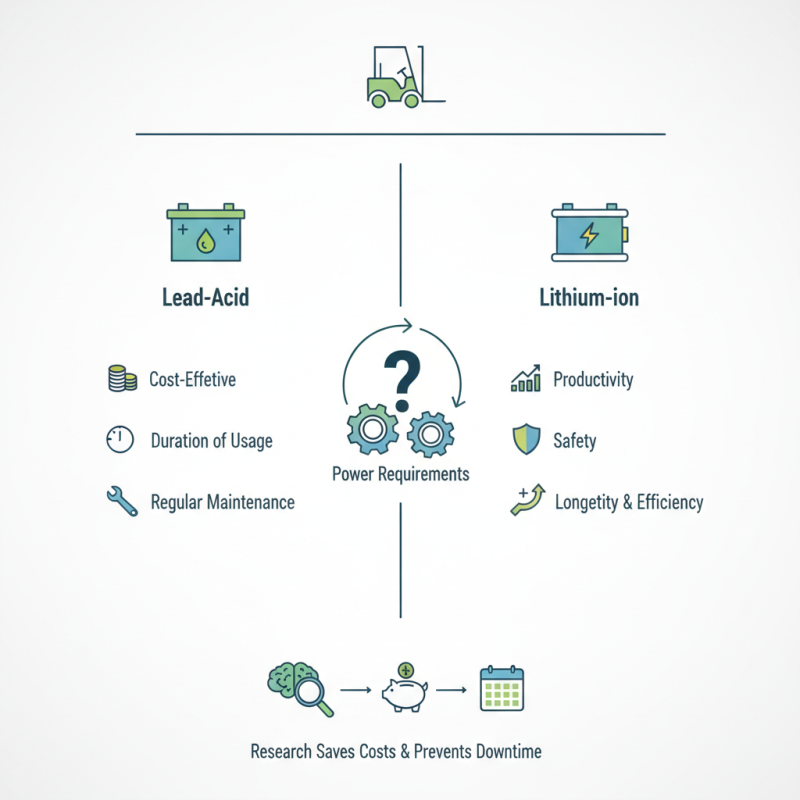
When evaluating forklift batteries, consider the power requirements and duration of usage. Lead-acid batteries offer a cost-effective solution, while lithium-ion batteries provide longevity and efficiency. Understanding these options can lead to better operational effectiveness. Furthermore, maintenance needs vary considerably across types. Regular checks can prevent downtime and enhance battery life.
It's essential to reflect on how poorly chosen forklift batteries can disrupt workflow. Investing time in research can save costs later. A structured approach might lead to better performance and reliability. In the forklift battery industry, making the right choice is not just practical; it’s vital for success.
Understanding Different Types of Forklift Batteries Available in the Market
Choosing the right forklift battery can significantly impact your operations. Various types of forklift batteries are available, each serving different needs. The most common types are lead-acid, lithium-ion, and gel batteries.
Lead-acid batteries are traditional and widely used. They are cost-effective and reliable for many applications. However, they require regular maintenance. In contrast, lithium-ion batteries are gaining popularity for their efficiency and longer lifespan. They also charge faster, reducing downtime. Gel batteries offer better safety against spills and are ideal for sensitive environments.
**Tip:** Assess your operational requirements before making a choice. Consider factors like cycling frequency and duration.
Battery weight and size are critical too. Ensure the battery fits your forklift without compromising safety. An oversized battery can lead to performance issues.
**Tip:** Consult with a battery specialist if unsure. They can help you determine the best fit for your machinery.
Remember, evaluating options thoroughly is essential. A rushed decision may lead to unnecessary costs or operational disruptions. Take your time to reflect on your specific needs before committing.
Types of Forklift Batteries and Their Applications
This bar chart illustrates the capacity of different types of forklift batteries available in the market. Lead-acid batteries are commonly used for their cost-effectiveness, while lithium-ion batteries are gaining popularity for their efficiency and longevity.
Evaluating Your Forklift's Power Requirements and Usage Patterns
Selecting the right forklift battery begins with assessing the power requirements of your forklift. Each forklift operates under different conditions. For example, electric forklifts typically require batteries with capacities ranging from 24 volts to 80 volts. Understanding these voltage requirements is critical. A study from the Industrial Truck Association indicates that improper power levels can lead to inefficiencies up to 30%.
Usage patterns also play a significant role. Facilities with frequent, heavy usage generally benefit from batteries that support rapid charge and discharge cycles. A report from Forkliftaction shows that higher-capacity batteries can provide longer operational hours—up to 10 hours—before needing a recharge. However, large batteries often require more maintenance and can be cost-prohibitive when not fully utilized.
Consider the workload and the shift patterns of your operation. If your warehouse operates in shifts, longer-lasting batteries might be necessary. The choice between lead-acid and lithium-ion batteries is also pivotal and adds complexity. Lithium-ion batteries tend to have a higher upfront cost but can yield more significant energy savings over time. Balancing these factors is essential to avoid overspending, while still ensuring optimal performance. Each choice carries potential trade-offs, necessitating careful consideration.
Assessing Battery Lifespan, Maintenance Needs, and Charging Options
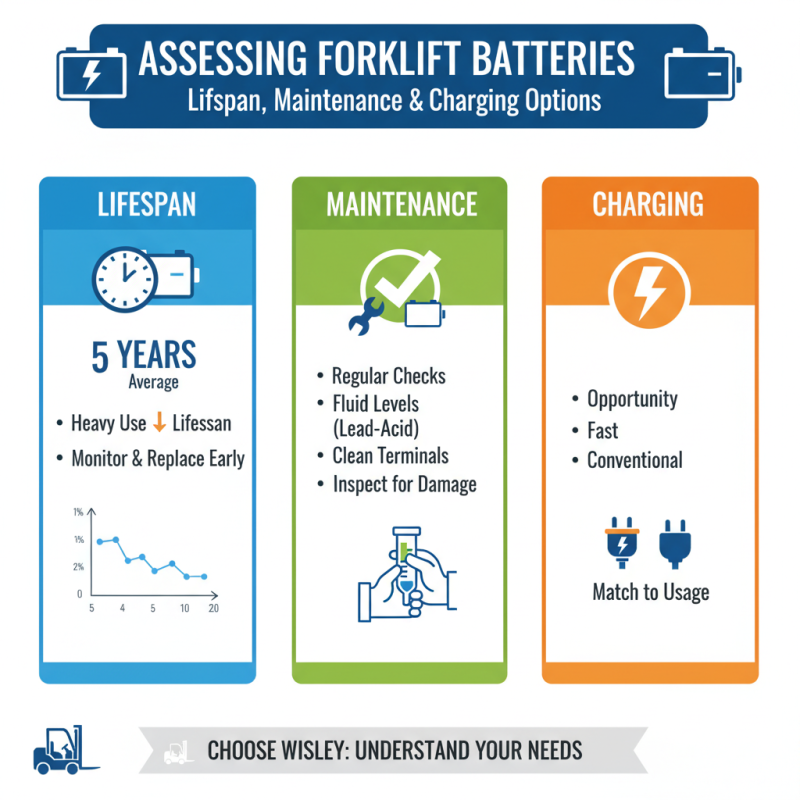
Choosing the right forklift battery requires a deep understanding of your specific needs. Battery lifespan is a critical factor. Most forklift batteries last around five years, but usage patterns vary. Heavy daily use can shorten this lifespan. It's essential to monitor usage and replace batteries before they fail. Regular checks can help you identify potential issues early.
Maintenance is another key component. Some batteries need routine watering and cleaning, while others are almost maintenance-free. Understanding the maintenance requirements of your chosen battery type is vital. Neglecting maintenance can lead to unexpected failures and costly downtimes. Consider how much time and effort your team can dedicate to this task.
Charging options play a significant role in battery performance. Fast charging may save time, but it can reduce battery life. Standard charging is safer for longevity, but it requires proper scheduling. Evaluate how charging practices fit into your operations. Ultimately, the aim is a balance between efficiency and battery health.
Comparing Costs and Efficiency of Conventional vs. Lithium-Ion Batteries
Choosing the right forklift battery can significantly impact your operations. Conventional batteries are often less expensive initially but have some drawbacks. They require regular maintenance, and charging can take several hours. This downtime can affect productivity. The typical lifespan of these batteries is shorter compared to lithium-ion options.
Lithium-ion batteries, while more expensive upfront, offer numerous advantages. They charge quickly, often within an hour, allowing for minimal downtime. Their efficiency is remarkable, providing consistent power and reducing operational costs over time. However, the initial investment can cause hesitation for some companies. This choice requires careful consideration of your operational needs.
Reflecting on your usage patterns may help clarify your decision. If your operation runs continuously, lithium-ion might be the way to go. On the other hand, if you have lighter usage, conventional batteries could suffice. Assessing the long-term benefits and costs is crucial. Each option has its merits and drawbacks, and understanding these nuances is key to making an informed decision.
How to Choose the Right Forklift Battery for Your Needs? - Comparing Costs and Efficiency of Conventional vs. Lithium-Ion Batteries
| Battery Type |
Initial Cost ($) |
Lifespan (Years) |
Cycle Time (Hours) |
Maintenance |
Energy Efficiency (%) |
| Conventional Lead-Acid |
$4,000 |
5 |
8 |
High |
70 |
| Lithium-Ion |
$10,000 |
8 |
2 |
Low |
90 |
Identifying the Right Battery for Specific Forklift Models and Applications
Choosing the right battery for your forklift requires careful consideration. Different forklifts have unique power needs. Electric forklifts typically use lead-acid or lithium-ion batteries.
Lead-acid batteries are known for their affordability and robustness. However, they may require regular maintenance and have a shorter lifespan.
For specific applications, analyze the operating environment. If you're using a forklift indoors, a sealed battery may be a better fit. These batteries prevent leakage and gas emissions, ensuring safety in confined spaces. Outdoor use may require a battery that can handle varying temperatures and moisture.
Tips: Always check the forklift's manual for battery specifications. Evaluate the typical daily usage to determine the right capacity. Proper charging practices extend battery life and enhance performance.
A reliable supplier can provide insights and guidance tailored to your application needs.