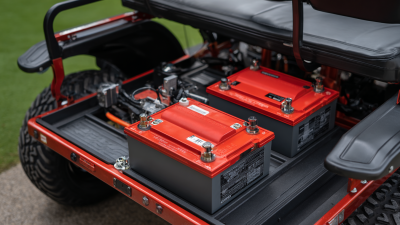
How to Choose the Best 72v Golf Cart Battery for Your Needs?
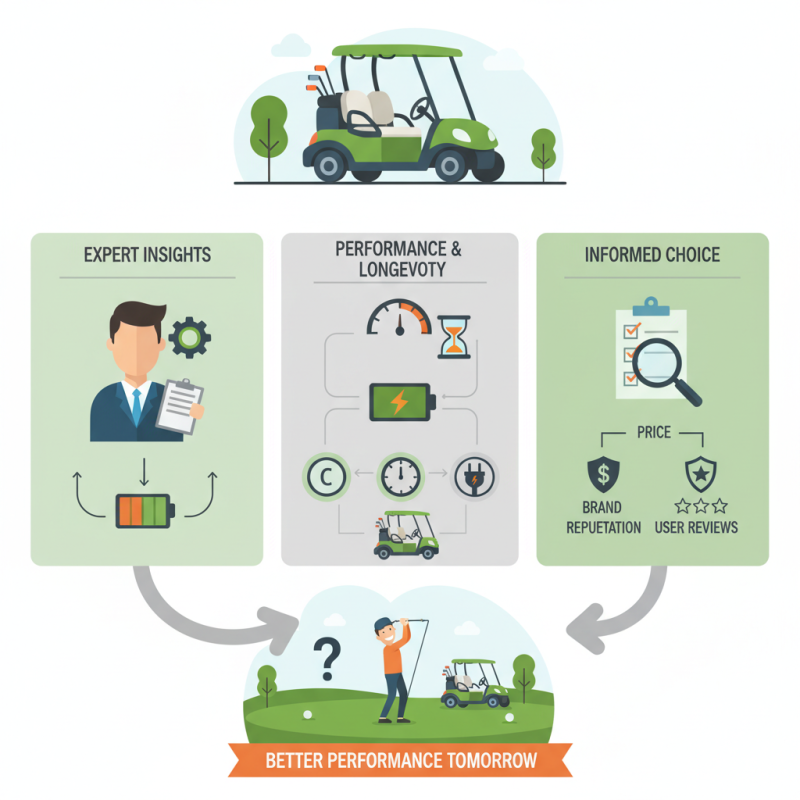
When it comes to choosing the best 72v Golf Cart Battery, expert insights can make a significant difference. Mark Johnson, a leading specialist in the golf cart industry, once stated, “Selecting the right battery can enhance both performance and longevity.” This reflects the importance of making an informed choice for your specific needs.
The right 72v Golf Cart Battery can impact your cart's efficiency and usage experience. Understanding capacity, lifespan, and compatibility with your model is crucial. Many users overlook these factors, leading to dissatisfaction. A battery that doesn't meet your demands may drain quicker, reducing your enjoyment on the course.
It’s vital to ask questions before investing in a 72v Golf Cart Battery. Look beyond price; consider the brand reputation and user reviews. A battery that works for one model might not suit another. Reflecting on previous purchases can help you avoid common pitfalls and enhance your golf outings. An informed decision today can lead to better performance tomorrow.
Understanding Voltage Requirements for 72V Golf Cart Batteries
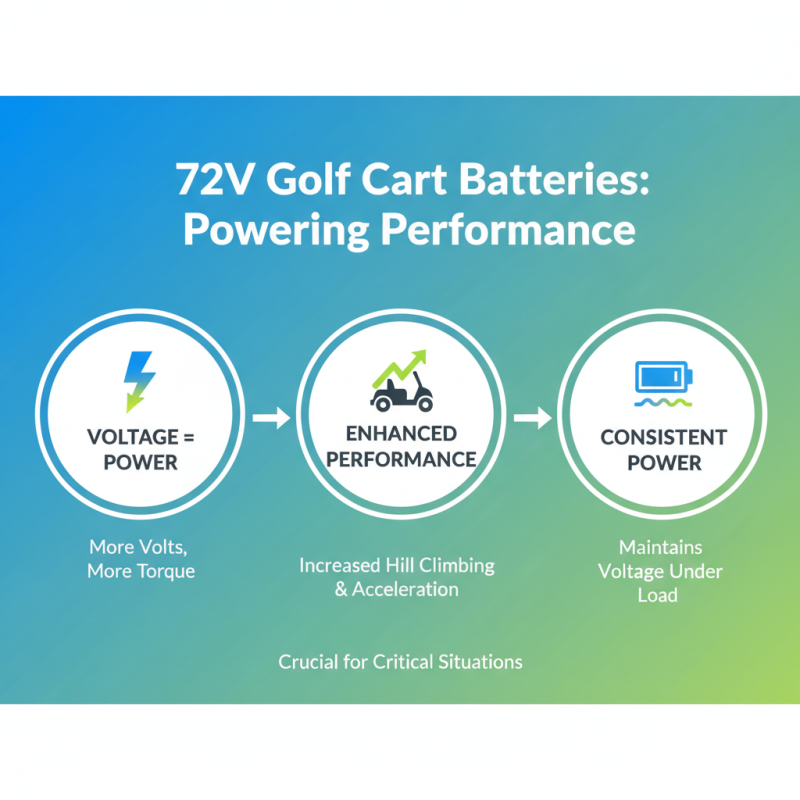
When selecting a 72V golf cart battery, understanding voltage requirements is crucial. Voltage determines how powerful your cart will be. A 72V system typically provides more torque. This can enhance performance. Look for batteries that can maintain voltage under load. Consistency is important in critical situations.
Choosing the right battery isn't just about voltage. Capacity, measured in amp-hours (Ah), impacts how long your cart runs. Higher Ah ratings mean longer use between charges. Consider your travel habits. Do you take long rides or short trips? Analyze your charging habits too. This affects battery life.
Tips: Ensure the battery fits within your budget. Quality shouldn't be compromised for a low price. Heavy-duty batteries often serve longer. Monitor voltage levels regularly. It helps avoid unexpected failures. Remember, not all batteries are created equal. Always research before purchasing.
Evaluating Capacity: Amp-Hours and Their Impact on Performance
When selecting a 72v golf cart battery, understanding amp-hours (Ah) is crucial. Amp-hours measure the battery's capacity. A higher Ah rating means the battery can deliver more power for longer without recharging. For example, a 100Ah battery can theoretically run a device drawing 10 amps for 10 hours. This figure helps you gauge how long your golf cart will last between charges.
However, the relationship between Ah and performance isn’t always straightforward. Real-world conditions often differ from theoretical calculations. Environmental factors, terrain, and weight can significantly reduce runtime. Studies show that temperature variations can cause battery efficiency to dip by 10-15%. Therefore, it's essential to consider your typical usage scenario. Evaluate how often you drive, speed levels, and any additional weight carried, as these factors directly impact battery life.
The choice of battery also influences recharge times and overall efficiency. With a high-capacity battery, replenishing energy takes longer. If you need quick turnarounds, a balance between amp-hours and recharge speed is vital. Be aware that while larger batteries may seem advantageous, they can also lead to overcapacity, where you only use a fraction of their potential. This mismatch can lead to reduced lifespan and worth reflecting on, considering your unique requirements.
Understanding Amp-Hours and Their Impact on Golf Cart Battery Performance
Exploring Battery Types: Lithium vs. Lead-Acid for Golf Carts
When choosing a battery for your golf cart, understanding the differences between
lithium and
lead-acid options is crucial.
Lithium batteries are lighter and offer a
compact design. They charge faster and have a
longer lifespan. However, they often come with a
higher initial cost. This can be a significant
factor for budget-conscious buyers.
Lead-acid batteries, on the other hand, are traditionally used in golf carts. They are
usually more affordable upfront. Yet, they tend to be
heavier and require more maintenance. Their
lifespan is shorter compared to lithium batteries. You may find yourself replacing
them more frequently. This could lead to
hidden expenses over time.
Consider the charging style you prefer. Lithium batteries need a specific charger,
while lead-acid batteries have more flexibility. Think about your use case too. If
you play golf frequently, a lithium battery may save you
time and hassle
in the long run. But for occasional use, lead-acid might suffice.
Weigh the pros and cons carefully
to find what fits your lifestyle best.
Assessing Lifespan and Cycle Life of 72V Batteries: Key Metrics
When assessing 72V golf cart batteries, understanding lifespan and cycle life is crucial.
Lifespan refers to how long a battery can function before it needs replacement. Many
lithium-ion batteries can last between 2,000 to 5,000 cycles. Cycle life
represents the number of complete charge-discharge cycles a battery can undergo. Ideally, you want a
higher cycle life.
The quality of materials used can significantly impact both lifespan and
cycle life. Studies show that batteries made with high-grade
lithium compounds provide better performance and longevity. In contrast, cheaper
alternatives may deteriorate quickly, showing only 500 cycles. This discrepancy highlights the
importance of investment in a quality 72V golf cart battery.
Charging practices also play a role. Frequent, shallow discharges might seem convenient but can harm overall
cycle life. Conversely, fully discharging a battery regularly can reduce its lifespan.
Balancing the charging habits can extend the life of your
battery by up to 30%. Choose wisely. Consider these metrics carefully to ensure your
investment meets your needs.
Factors Influencing Charging Efficiency and Compatibility for 72V Systems
When selecting a 72V golf cart battery, charging efficiency is key. You need to consider your cart's compatibility with the battery. Make sure the battery can handle the voltage requirements. Incompatible systems can lead to inefficient charging. Check the charger type. Is it suitable for your battery setup?
Tips: Ensure your battery connects seamlessly with the charging system. Mismatched components can cause damage.
Another factor is the battery's chemistry. Lithium-ion batteries often charge faster and last longer than lead-acid options. However, they can be costlier. Think about your budget. Do you plan to use the cart frequently? Then investing in a better battery might pay off.
Tips: Research battery life and warranty options. A longer warranty indicates better quality.
Remember, look for user reviews and experiences. Sometimes, things aren’t what they appear. A high price tag doesn't always mean an efficient battery. Test it out if possible. Recharging should be smooth and straightforward. Keep these elements in mind for an optimal choice.
How to Choose the Best 72v Golf Cart Battery for Your Needs?
| Battery Type |
Capacity (Ah) |
Charging Time (hrs) |
Compatibility |
Life Cycle (Cycles) |
| Lithium-ion |
100 |
4 |
Universal |
2000 |
| AGM |
92 |
6 |
Limited |
1200 |
| Lead Acid |
90 |
8 |
Specific |
500 |
| Gel |
85 |
7 |
Moderate |
600 |