Factory Tour

How to Choose the Right Lithium Battery for Your Automobile?

Choosing the right lithium battery for your automobile can feel overwhelming. An expert in the field, Dr. Smith, once noted, "The right battery can mean the difference between a smooth start and frustration." With the rise of Automobile Start Lithium Batteries, understanding their features is crucial.

Today’s vehicles require reliable power sources. Lithium batteries are lightweight and efficient. They offer a great advantage over traditional lead batteries. However, not all lithium batteries are created equal. Quality and specifications matter significantly.

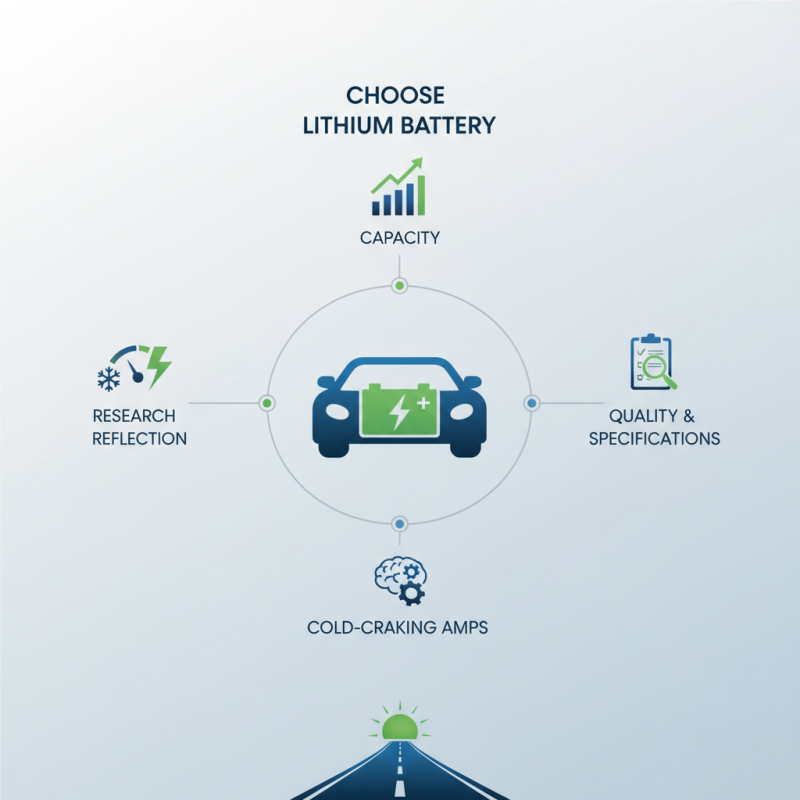
Choosing a suitable battery can be challenging. Many options exist, but not all meet your car's demands. It's important to evaluate capacity, longevity, and cold-cranking amps. Ignoring these factors can lead to poor performance. The right Automobile Start Lithium Battery can enhance your driving experience significantly. However, take your time to research and reflect on your choices.
How to Choose the Right Lithium Battery for Your Automobile?

Understanding the Types of Lithium Batteries Used in Automobiles

When choosing the right lithium battery for your automobile, it's essential to understand the different types available. Lithium-ion batteries are commonly used in electric vehicles due to their high energy density and lightweight design. These batteries perform well in various temperatures and have a longer lifespan compared to traditional lead-acid batteries.


Another popular option is lithium iron phosphate (LiFePO4) batteries. They are known for their stability and safety. However, they may have a lower energy density, which can impact range. These batteries are a good choice for hybrid vehicles or applications where safety is crucial.


Tips: Consider your driving habits. If you often drive long distances, prioritize batteries with higher energy density. Also, evaluate the weight of the battery; a lighter battery can improve vehicle performance. Ensure compatibility with your vehicle's systems, as some types may require specific charging setups.


Choosing the right lithium battery isn't just about specifications. Reflect on your long-term plans and how many charges you might need. If you're planning to keep the vehicle for years, an efficient battery can save you time and cost in the future. Always think ahead before making a decision.
Key Specifications to Consider When Selecting a Lithium Battery

How to Choose the Right Lithium Battery for Your Automobile?

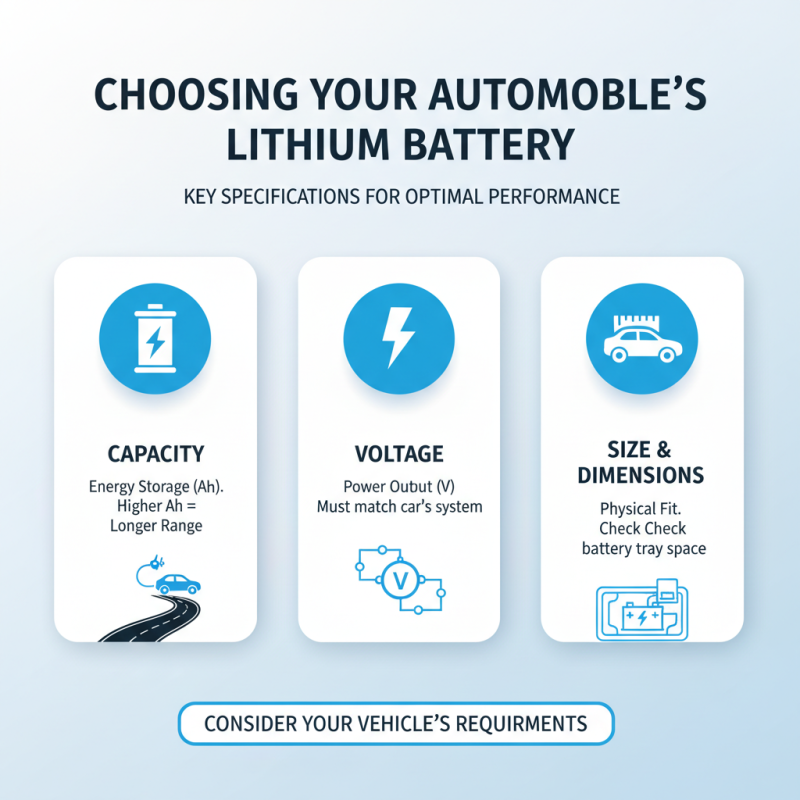
Choosing the right lithium battery for your automobile involves understanding key specifications. Capacity, voltage, and size are crucial factors. Capacity indicates how much energy the battery stores. It's typically measured in ampere-hours (Ah). A higher capacity often means longer driving range.

Voltage is another important aspect. Most automotive applications require a specific voltage for efficient performance. Check your vehicle’s requirements to avoid potential issues. The size of the battery must fit your vehicle’s designated space. An improper fit can lead to operational challenges.

Tips: Always verify if the battery’s terminals align with your vehicle’s connectors. Incorrect connections can cause damage. Consider the battery's weight too. A heavier battery may impact vehicle handling.

Don’t overlook charging cycles. Some lithium batteries have a limited number of effective charge cycles. Understanding this helps in planning replacements. Look for batteries with good longevity to maximize investment. Reassess your choices periodically for optimal performance.

Evaluating Battery Capacity and Voltage for Automotive Applications

When choosing a lithium battery for your automobile, evaluate battery capacity and voltage carefully. Capacity primarily refers to how much energy the battery can store. Higher capacity allows for better performance, especially in electric vehicles. A battery's capacity is usually measured in amp-hours (Ah). It determines how long your vehicle can run before needing a recharge.

Voltage plays a crucial role in ensuring compatibility with your automobile's electrical system. Most automotive applications require a specific voltage level. If the voltage is too low, performance suffers. If it’s too high, it can damage electrical components. Choose a battery that matches your vehicle's specifications.

Many users overlook the significance of these factors. Some might opt for a battery solely based on price rather than specifications. This could lead to underperformance or potential failure. Conducting thorough research is essential. Don't rush into a decision. Understand your vehicle's requirements first, then choose accordingly.

How to Choose the Right Lithium Battery for Your Automobile? - Evaluating Battery Capacity and Voltage for Automotive Applications

Battery Type Nominal Voltage (V) Capacity (Ah) Cold Cranking Amps (CCA) Cycle Life (Cycles)
Lithium Iron Phosphate (LiFePO4) 12.8 100 850 2000
Lithium Nickel Manganese Cobalt (NMC) 3.7 60 720 1000
Lithium Cobalt Oxide (LCO) 3.7 50 550 800
Lithium Manganese Oxide (LMO) 3.7 75 600 1500
Lithium Polymer (LiPo) 3.7 45 500 300

Assessing Battery Weight and Size for Optimal Vehicle Performance

Choosing the right lithium battery for your automobile goes beyond capacity. Weight and size significantly impact vehicle performance. A lighter battery can improve acceleration and fuel efficiency, while a compact design saves space. Studies show that every 10% reduction in battery weight can enhance overall vehicle dynamics.

Consider the balance between power capacity and physical dimensions. A smaller battery might not provide adequate range, but a heavier one can compromise handling. Be wary of batteries that exceed your vehicle’s weight limits. An excessively heavy battery can strain suspension systems and reduce lifespan.

Tips: Always consult your vehicle's specifications before purchasing. Compare different options that fit your design space. Look into the battery's discharge rates and overall energy density, as these factors influence efficiency. Remember, even a minor mistake in selection can lead to decreased performance or safety risks. The right choice ensures compatibility and boosts your car's capabilities.

Battery Weight and Size Impact on Vehicle Performance

Exploring Lifespan and Warranty Considerations in Battery Selection

How to Choose the Right Lithium Battery for Your Automobile?

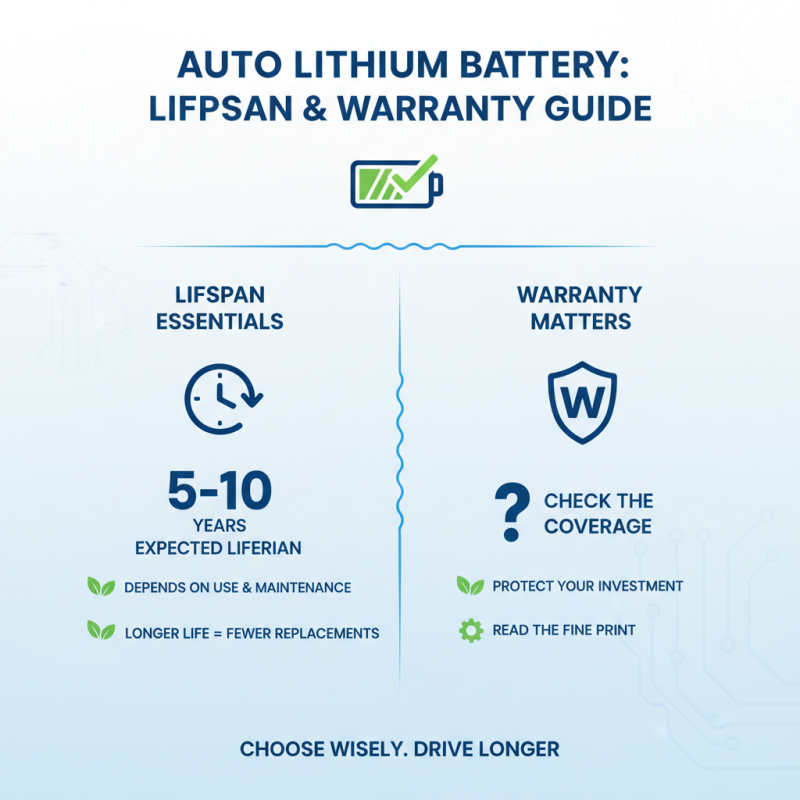
When selecting a lithium battery for your automobile, lifespan and warranty are crucial factors. Understanding the lifespan is essential for making a sound investment. Most lithium batteries can last between 5 to 10 years, depending on use and maintenance. Look for specifications that outline the expected lifespan. Remember, a longer life means less frequent replacements.

Warranty considerations also play a vital role. A robust warranty indicates the manufacturer's confidence in their product. Warranties usually range from 3 to 10 years. Review the terms carefully. What exactly is covered? Consider the fine print. Some warranties exclude certain types of damage.

Tips: Check the environmental impact of lithium batteries. Make sure you understand recycling options too. Evaluate how battery performance varies in extreme weather conditions. Lastly, consider the replacement cost. An affordable battery upfront may not be the best long-term choice. Think about both the initial and ongoing expenses.